
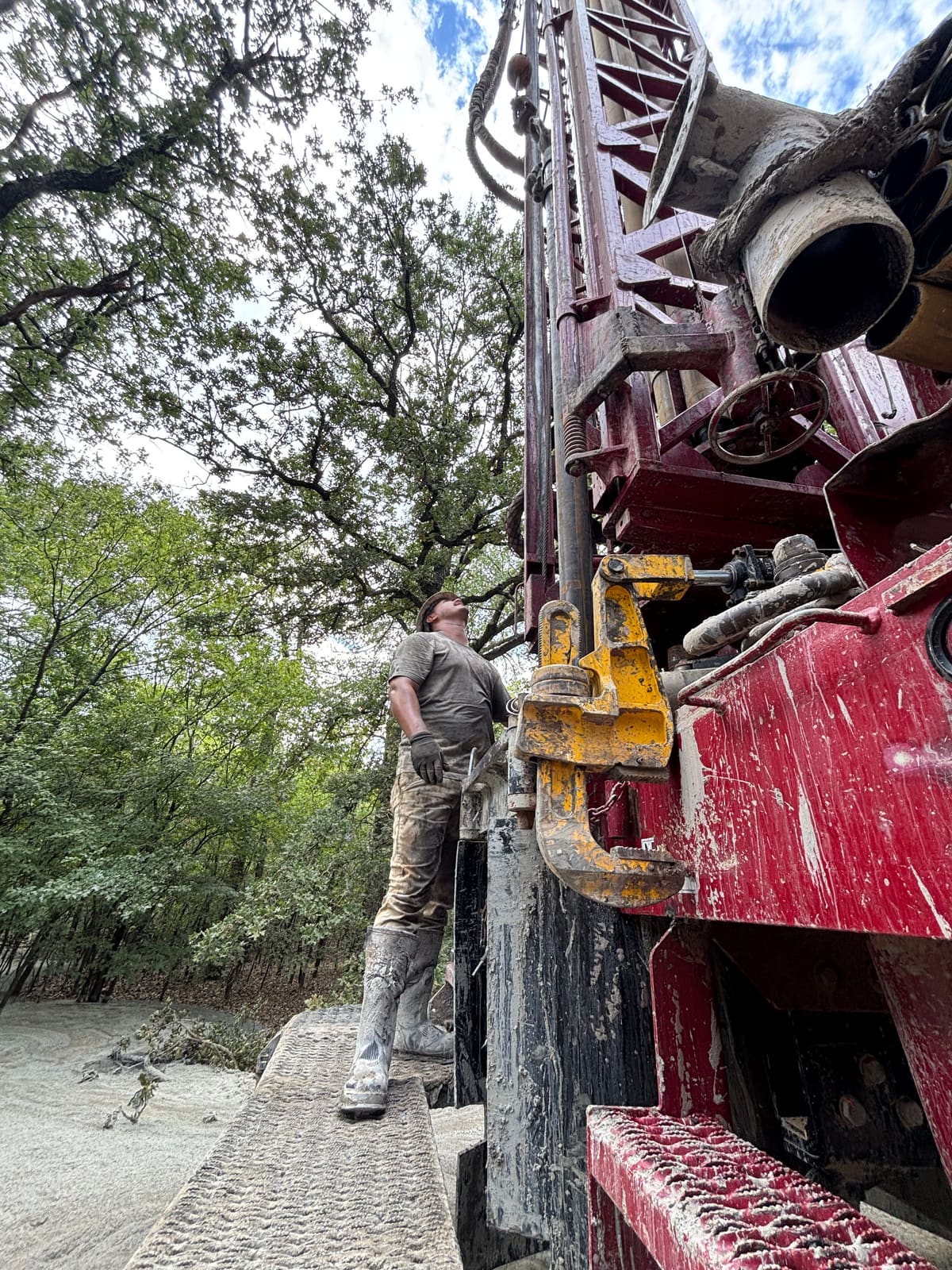
Well drilling · Denton, Wise & Cooke County
Residential water well drilling in North Texas
One call covers the records research, the permits, the drilling, the pump, and the cleanup. Backed by a 2-year warranty.
Triangle J Water Wells drills private residential water wells for homes, ranches, and acreage across Denton, Wise, and Cooke County, Texas. We're a family-owned drilling company, and every well is turnkey: one call covers the well records research, the groundwater district paperwork, the drilling, the pump, and the cleanup, all backed by our 2-year warranty.
Sited on state well records, not guesswork
We have access to detailed well records for the entire state of Texas, and we use them before a rig ever shows up. We pull the records near your property to see how far down the water has been historically, what formations we'll drill through, and which aquifer your neighbors produce from. Then we site the well to meet groundwater district setback requirements from septic systems and property lines, and design the construction to match what the records tell us. The result is a well designed for your specific piece of Texas, not a guess.
In our home counties that usually means the Trinity or Woodbine aquifer. Here's how the two compare, and what the difference means for depth and cost.
Drilling methods
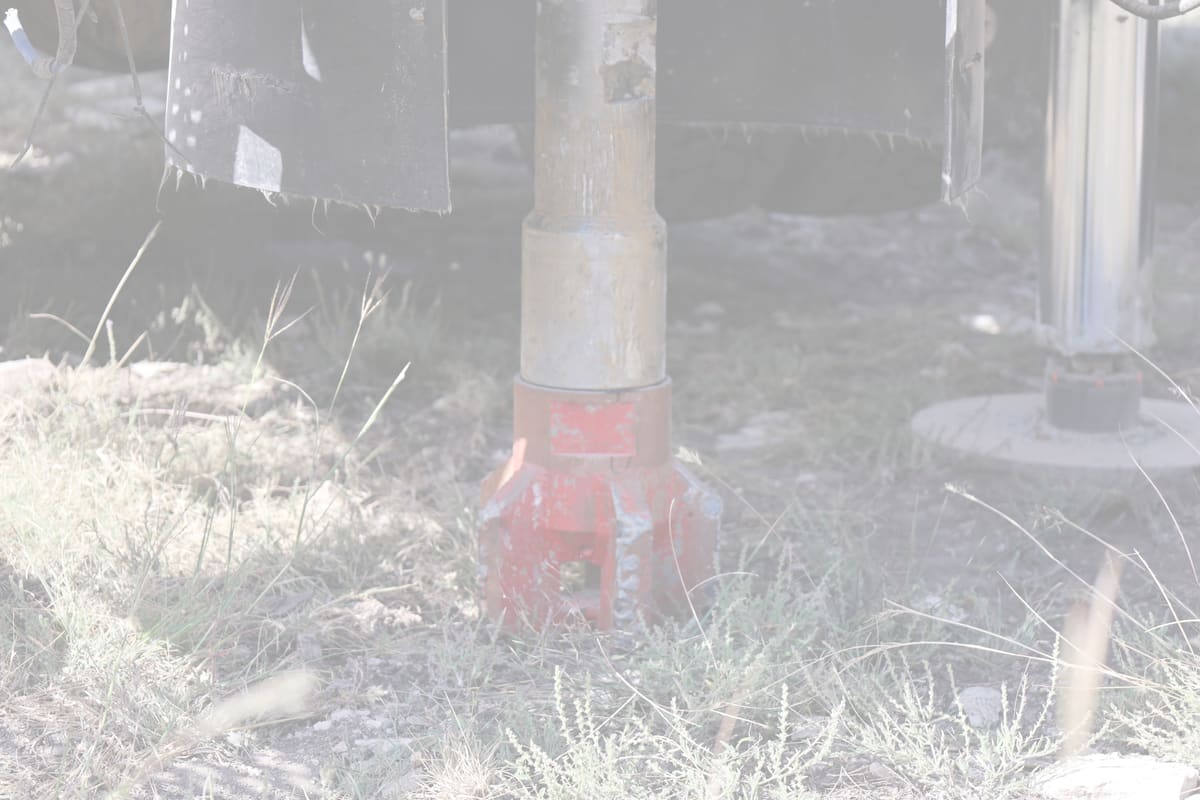
Air rotary and mud drilling
We drill with both air rotary and mud rotary methods, and the ground decides which one we use. As a general rule, air rotary uses compressed air to clear cuttings from the borehole and suits harder, more consolidated rock, while mud drilling circulates fluid that supports the hole in looser formations. Limestone and shale formations drill slower than sand.
Knowing which formations sit under your land before we start is one more reason the records check matters.
Wells for new home construction
Building outside the city water lines? We work with homeowners and builders to put a producing well on your homesite before the slab is poured, so water is never the thing holding up the build. If you're a builder with multiple lots, see our page for home builders and developers.
Replacement water wells
If your existing well has failing production, chronic sand or silt, or a casing that's reached the end of its life, we drill replacement wells engineered to outperform the original, using modern construction standards and what decades of nearby well logs tell us about your aquifer. When we replace a well, we can also properly plug and abandon the old one to state standards, which protects the aquifer your new well depends on and is required under Texas rules.
What turnkey drilling includes
- Free estimate. We research the state well records around your property and quote from real local data.
- Paperwork. We register the well with your groundwater conservation district before drilling. You file nothing.
- Drilling and construction. Casing, screen, and grouting built to Texas well construction standards.
- Pump and equipment. Submersible pump, pressure tank, and any storage system installed and tested.
Most residential wells take 2-4 days of on-site work depending on depth and ground conditions. For the full breakdown, see how long it takes to drill a well.
What a residential well costs here
The honest answer: it depends mostly on depth, and depth varies. Wells into the Trinity Aquifer can differ by hundreds of feet between properties. Complete residential systems in North Texas typically run $11,000 to $60,000+, and larger or deeper systems can exceed that. That's why we quote from the well records near your land rather than a one-size-fits-all price. See the full cost guide.
The short version
What you can count on
- 2-yearwarranty on every new well
- #61646Texas Water Well Driller's License
- 2-4 daysof on-site drilling work, typically
- 499 ftaverage Denton County well on our public record
Depth average from Texas Submitted Drillers Reports for license #61646, 2022-2026. Your property may differ.
Common questions
Residential drilling questions we hear a lot
How deep will my well need to be?
Local depths run from around 200 feet to 800+ feet depending on the formation and where the water is. Our public-record average in Denton County is 499 feet, but your property may differ. We check the well records around your land and tell you what we expect before drilling. More on local depths here.
Can I drill a well on my lot?
We typically drill on properties of 2 or more acres, which is what county rules generally allow. If your lot is smaller, confirm with your county before planning a well. We can help you sort out what applies to your property.
Do you handle the permits?
In most cases, yes. We register the well with your groundwater conservation district before drilling, so you file nothing. If a county requires an engineered site plan, obtaining that stays with the property owner. More on districts and permits.
How long does the whole process take?
Permitting typically takes 2-4 weeks in most North Texas counties, and the drilling itself is usually 2-4 days of on-site work. Weather, depth, and ground conditions can move that in either direction.
Where do you drill?
Throughout Denton, Wise, and Cooke County, including Denton, Sanger, Krum, Aubrey, Pilot Point, Decatur, Bridgeport, Boyd, Gainesville, Muenster, Valley View, and the country in between. See the full list of towns we serve.
Ready for reliable water on your own land?
Call or text (940) 230-2649 for a free estimate. We'll research the well records around your property and quote from real local data.